Understanding Cancer and Its Global Impact in 2026
Cancer is not a single disease — it’s a group of over 100 conditions where cells grow uncontrollably and spread, affecting organs, families, and communities. Globally, in 2026, cancer continues to be a leading cause of death, with over 20 million new cases reported worldwide in recent years and projections reaching 35 million by 2050.
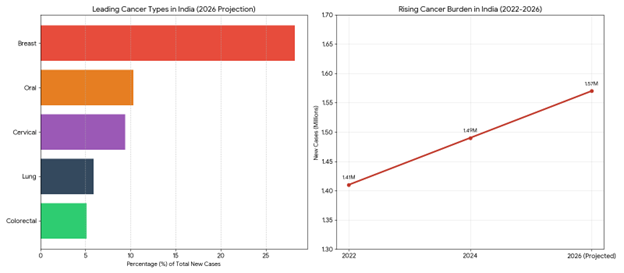
In India, the cancer burden is also rising. Recent 2026 estimates project more than 1.57 million new cases, with mortality increasing among younger adults — a reminder of the urgent need for awareness, prevention, and early action. At Dr. Mohan Menon Cancer Centre in Khar, we are committed to providing personalized, people-centred care, focusing on prevention, early detection, and holistic treatment for every patient.
2026 Cancer Snapshot: Global vs. India
This trimmed visualization focuses strictly on the most critical comparison: the total volume of new cases and the leading specific threats.
Region | 2026 Projected New Cases | Top 3 Specific Cancers |
Global | $21.5$ Million | Lung, Breast, Colorectal |
India | $1.57$ Million | Breast, Oral, Cervical |
To reduce the 1.57 million projected cases in India, health priorities are focused on three areas:
- Lifestyle: Eliminate tobacco (target: Oral Cancer) and maintain a healthy weight (target: Colorectal/Breast).
- Early Detection: Self-exams and screening for Breast and Oral cancer after age 30.
- Vaccination: Widespread HPV vaccination to eliminate Cervical cancer as a leading threat.
World Cancer Day 2026: United by Unique
Observed annually on 4 February, World Cancer Day 2026 unites people, organizations, and governments across the globe to raise awareness, promote prevention, and drive action against cancer.
Theme: United by Unique
The 2025–2027 World Cancer Day campaign emphasizes a people-centred approach, putting patients and their unique journeys at the heart of care. Key principles include:
- United: Patients, families, caregivers, and healthcare providers stand together against cancer globally.
- Unique: Each cancer journey is personal, shaped by genetics, life experiences, and social context.
In 2026, the focus is on turning individual stories into catalysts for action, helping improve cancer prevention, treatment, and care policies worldwide.
Be United by Your Unique Story
This World Cancer Day 2026, spread awareness, support survivors, and stand for people-centred cancer care.
Global Cancer Trends in 2026
Cancer patterns are shifting worldwide in 2026 due to aging populations, lifestyle changes, environmental factors, and better early detection. Key trends include:
- Lung cancer remains the top cause of cancer deaths worldwide.
- Breast cancer continues to rise globally, particularly in women under 50.
- Colorectal cancer is increasingly diagnosed in younger adults, highlighting the need for earlier screening.
- Certain cancers, such as those linked to air pollution, are increasing even in non-smokers.
Suggested Chart: Top 5 Rising Cancers Worldwide (2020–2026)
- Breast cancer (<50 women) – 25% increase
- Colorectal cancer (<50 adults) – 20% increase
- Pancreatic cancer – 18% increase
- Liver cancer – 15% increase
- Prostate cancer (advanced) – 12% increase
Managing Side Effects Through Gut Microbiome Support
Immunotherapy can sometimes cause the immune system to become overactive. This may lead to side effects such as diarrhea, fatigue, skin rashes, or inflammation affecting different organs.
Clinical experience and emerging research suggest that patients with a healthier gut microbiome may experience fewer or less severe side effects. A balanced gut appears to help keep immune reactions in check.
Supportive care may involve:
- Tailored dietary advice
- Avoiding unnecessary antibiotics
- Thoughtful use of probiotic foods when appropriate
- Paying early attention to digestive symptoms
At Dr. Mohan Menon Cancer Center, side effect management begins early. The goal is not only to treat symptoms but to support the body in handling treatment more comfortably and safely.
Speak With an Oncology Specialist
Learn how treatment choices and gut health work together.
Global Cancer Trends in 2026
Cancer patterns are shifting worldwide in 2026 due to aging populations, lifestyle changes, environmental factors, and better early detection. Key trends include:
- Lung cancer remains the top cause of cancer deaths worldwide.
- Breast cancer continues to rise globally, particularly in women under 50.
- Colorectal cancer is increasingly diagnosed in younger adults, highlighting the need for earlier screening.
- Certain cancers, such as those linked to air pollution, are increasing even in non-smokers.
Suggested Chart: Top 5 Rising Cancers Worldwide (2020–2026)
- Breast cancer (<50 women) – 25% increase
- Colorectal cancer (<50 adults) – 20% increase
- Pancreatic cancer – 18% increase
- Liver cancer – 15% increase
- Prostate cancer (advanced) – 12% increase
Cancer Trends in India in 2026
India’s cancer landscape mirrors global trends but has unique features:
- New cancer cases are projected to rise from 1.46 million in 2022 to 1.57 million in 2026.
- The most common cancers are breast, oral, cervical, lung, and colorectal.
- Tobacco use, pollution, and lifestyle changes are key contributors.
- Alarmingly, in some regions, cancer deaths are rising faster than overall population growth, particularly among younger adults.
People-Centred Cancer Care at Dr. Mohan Menon Cancer Centre
The “United by Unique” theme in 2026 highlights the importance of compassionate, individualized care:
- Every patient’s genetics, environment, and personal outlook are considered.
- Emotional and social impacts on families, caregivers, and communities are recognized.
- Treatment pathways are adapted to personal goals, quality-of-life priorities, and cultural context.
- Advanced treatment options, including immunotherapy, targeted therapies, and precision medicine, are offered to improve outcomes for each patient.
At Dr. Mohan Menon Cancer Centre, this approach goes beyond clinical treatment — it is healing with dignity, empathy, and partnership, reflecting the vision of people-centred cancer care globally.
Advancements in Cancer Treatment: Hope Through Innovation
Over the past several years, cancer treatment has evolved significantly, shifting from conventional methods to more precise and personalized therapies. Key advancements include:
● Immunotherapy:
Immunotherapy has transformed cancer care by enabling the immune system to fight cancer more effectively. Clinical studies show that immunotherapy has improved long-term survival in cancers such as melanoma, lung cancer, and certain blood cancers, with 5-year survival rates increasing by up to 40–50% in selected patients compared to older treatments.
● Targeted Therapy:
Targeted therapies act on specific genetic or molecular changes within cancer cells. These treatments can reduce damage to healthy tissues and, in some cancers, have shown response rates of 60–80% when matched to the right molecular targets.
● Personalized Treatment Planning:
Advances in molecular testing and precision medicine allow treatments to be tailored based on cancer type, stage, and genetic profile. Personalized approaches have been shown to improve treatment effectiveness while lowering unnecessary toxicity, especially in breast, lung, and colorectal cancers.
● Improved Outcomes:
Due to early diagnosis and modern therapies, overall cancer survival rates have steadily improved. Today, nearly 1 in 2 cancer patients globally survive beyond 10 years, with significantly better quality of life compared to outcomes seen a decade ago.
At Dr. Mohan Menon Cancer Centre, these advanced treatments—including immunotherapy, targeted therapy, and precision-based treatment planning—are delivered through a people-centred care approach, ensuring compassionate, individualized treatment aligned with each patient’s medical and personal needs.
Prevention and Early Detection in 2026
While not all cancers are preventable, informed actions can reduce risk:
Lifestyle and Risk Reduction
- Avoid tobacco and second-hand smoke
- Maintain healthy weight and stay active
- Limit alcohol consumption
- Eat a balanced diet with fruits, vegetables, and whole grains
- Protect skin from UV exposure
Early Detection Saves Lives
- Regular screenings (mammograms, Pap tests, colonoscopy based on age/risk)
- HPV vaccination to prevent cervical cancer
- Awareness of early warning signs and immediate medical consultation
Suggested Chart: Cancer Survival by Detection Stage in 2026
- Stage I: 90–95% 5-year survival
- Stage II: 70–85%
- Stage III: 40–60%
- Stage IV: 10–30%
Actionable Steps for 2026 Readers
For Yourself:
- Schedule age-appropriate cancer screenings
- Make one healthy lifestyle change today
- Learn early cancer warning signs
For Your Community:
- Share personal stories or support others using #UnitedByUnique
- Advocate for people-centred policies improving access to individualized care
- Support local and national cancer awareness initiatives
At Dr. Mohan Menon Cancer Centre:
- Schedule consultations or screenings
- Join support groups for patients and caregivers
- Attend free cancer awareness seminars
Conclusion: Hope and Action in 2026
World Cancer Day 2026 reminds us that every cancer journey is unique, yet globally we stand united in hope, resilience, and action. By putting people first, we uplift lives, transform care, and inspire change worldwide.
This February 4th, unite by your uniqueness: schedule a screening, start a conversation, offer support, and engage in the fight against cancer. Together, we can make personalized cancer care the standard — not the exception, in India and across the globe.
References:
https://en.wikipedia.org/wiki/World_Cancer_Day
https://www.worldcancerday.org/
https://www.who.int/news-room/fact-sheets/detail/cancer?utm_source