
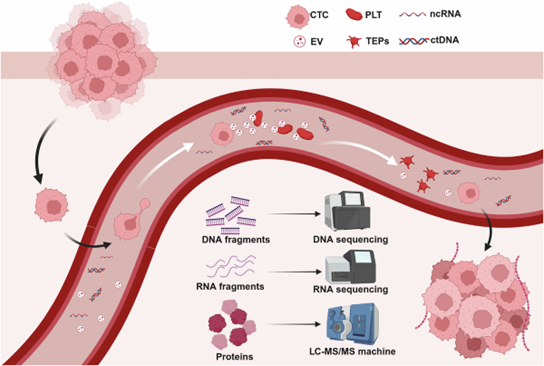
Cancer recurrence remains one of the most challenging aspects of oncology care. Even after successful treatment, the possibility of relapse creates both medical and emotional uncertainty. Globally, cancer continues to be a major health burden. According to the World Health Organization, cancer accounts for nearly 10 million deaths annually worldwide.
Recurrence risk varies depending on cancer type and stage:
- Colorectal cancer: Approximately 30–40% recurrence after treatment with curative intent. American Association for Cancer Research
- Early-stage breast cancer: 20–30% risk of distant (metastatic) recurrence, depending on subtype.
- Lung cancer: Recurrence rates may exceed 50% in certain stages despite curative resection.
Traditionally, follow-up care has relied on imaging scans and occasional tissue biopsies. However, imaging often detects recurrence only after tumors become radiologically visible.
Advances in molecular diagnostics have introduced liquid biopsy — a blood-based test that detects cancer recurrence at the molecular level, often months before abnormalities appear on conventional imaging.
At Dr Mohan Menon Cancer Center in Khar, Mumbai, liquid biopsy is integrated into personalized cancer surveillance strategies to enable earlier intervention and more precise treatment planning.
What Is Liquid Biopsy?
Liquid biopsy is a minimally invasive blood test that detects cancer-related material circulating in the bloodstream, primarily:
- Circulating Tumor DNA (ctDNA): DNA fragments released by tumor cells
- Circulating Tumor Cells (CTCs): Intact cancer cells in circulation
Unlike surgical tissue biopsies, liquid biopsy requires only a blood draw, making repeated monitoring safe and feasible throughout follow-up.
According to the National Cancer Institute, ctDNA analysis allows clinicians to identify tumor-specific genetic alterations and monitor disease activity with high precision
Schedule a consultation to learn how liquid biopsy can help detect cancer recurrence early and guide personalized treatment.
Why Early Detection of Recurrence Is Critical
Detecting Minimal Residual Disease (MRD)—microscopic cancer cells remaining after treatment—can significantly impact outcomes. Early molecular detection allows:
- Timely therapeutic intervention
- Access to more treatment options
- Personalized adjustments based on tumor genetics
The American Society of Clinical Oncology highlights that liquid biopsy provides dynamic insight into tumor evolution, including resistance mutations that may emerge over time.
Scientific Evidence Supporting Liquid Biopsy

Colorectal Cancer
A 2020 study published in Nature Medicine demonstrated that detectable ctDNA after surgery strongly predicted recurrence. Importantly, ctDNA detection preceded radiological recurrence by an average of 8.7 months.
Breast Cancer
Research archived in PubMed Central shows that ctDNA monitoring can detect relapse earlier than conventional tumor markers, with reported sensitivities up to 89% in selected studies.
Lung Cancer
In non-small cell lung cancer, liquid biopsy helps identify resistance mutations (such as EGFR T790M), allowing timely modification of targeted therapy before clinical progression.
Professional bodies including the European Society for Medical Oncology and ASCO increasingly recognize liquid biopsy as an important tool in precision oncology.
Speak with our oncology team to explore advanced monitoring and create a tailored follow-up plan.
Key Advantages in Cancer Surveillance
1. Minimally Invasive
Requires only a blood sample, allowing safe and repeat testing.
2. Early MRD Detection
Can detect microscopic disease levels below imaging resolution.
3. Real-Time Tumor Profiling
Tracks evolving genetic mutations and resistance patterns.
4. Broader Tumor Representation
Captures DNA from multiple tumor sites, offering a more comprehensive genetic profile.
5. Supports Precision Treatment
Enables targeted therapy selection based on identified mutations.
Current Limitations

While promising, liquid biopsy has limitations:
- Variable ctDNA shedding across tumor types
- Reduced sensitivity in very early-stage disease
- Lack of full standardization across laboratories
- Cost and accessibility considerations
- Possibility of false-positive or false-negative results
Ongoing international trials aim to refine testing schedules, improve sensitivity, and establish standardized guidelines.
The Future of Cancer Follow-Up
Liquid biopsy represents a shift from reactive imaging-based detection to proactive molecular surveillance. As assay sensitivity improves and clinical validation expands, it is expected to become increasingly integrated into routine oncology practice.
FAQs
Can liquid biopsy replace CT or PET scans?
No. ASCO recommends liquid biopsy as a complementary tool. Imaging provides anatomical information, while liquid biopsy offers molecular insight. Both are important.
How accurate is liquid biopsy?
Accuracy varies by cancer type and stage. Studies report sensitivities between 70–90% in appropriate clinical settings, with high specificity in validated applications.
What is Minimal Residual Disease (MRD)?
MRD refers to microscopic cancer cells remaining after treatment that are not detectable on imaging but may lead to recurrence. ctDNA analysis can help identify MRD early.
Is liquid biopsy available in Mumbai?
Yes. Advanced oncology centers, including Dr Mohan Menon Cancer Center in Khar, Mumbai, offer liquid biopsy as part of comprehensive cancer care programs.